All posts by M.J.

#227: Toward Better Subtitles

This is mark Joseph “young” blog entry #227, on the subject of Toward Better Subtitles.

Decades ago I saw a joke birthday card.  On the face it raved about how it was the first perfect birthday card, designed and printed entirely by a computer so nothing could possibly go wrong.  Inside, it said in Courier Block lettering, MERRY CHRISTMAS.

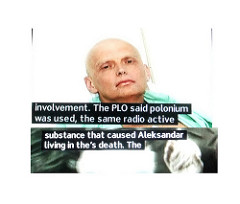
It came to mind recently because I have come to watch television with the subtitles activated so that if somehow I miss what someone says I can read it and keep up, and sometimes they can be rather silly.  In a recent time travel movie I analyzed, Paradox, one of the characters at one point asks what it is they are seeing, and another reasonably clearly says, “Quark gluon,” but the person writing the subtitles apparently had insufficient education in advanced particle physics to recognize those as words, and so subtitled it “[Speaks Indistinct]”.  My wife recently reported watching a British mystery series and seeing the name “Wetherington Perish Church” as the local parish church.

Image captured by Gwydion M. Williams

The reason I thought of the birthday card is upon reading some of these I began to wonder whether someone was experimenting with speech-to-text software, feeding the soundtrack into a computer and getting it to figure out what everyone is saying.  I somehow doubt it–speech-to-text software has its limitations, but some of the mistakes I’ve seen could only be made by a human.  The kind of mistakes I see strongly suggest that someone is sitting at a keyboard listening to the soundtrack and typing what they hear, and that no one is proofreading the finished product.  Yet it strikes me that the people who do these subtitles are missing an obvious aid in their efforts.

I once watched an excellent Spanish-language time travel move, Los Cronocrimines a.k.a. TimeCrimes, which was both subtitled and dubbed in English, and it was intriguing to me to notice that the subtitles did not always match the dubbing.  My conclusion was that the subtitles were probably the more accurate rendering of the original Spanish.  My reasoning was that the dubbed text had to be adjusted so that the words we heard in the audience credibly matched the movement of the lips of the speakers, but the subtitles would be a direct English translation of the original Spanish dialogue.  Therein lies my solution:  use the script.

It wouldn’t work for a lot of programs–news, reality shows, talk shows–but the majority of the television I watch is scripted.  The people on the screen aren’t making up their lines; they’ve memorized them (or sometimes are reading them from a teleprompter).  The script is available, and given the ubiquity of computers it’s almost certainly available in an electronic file format.  So the obvious fix is for those who write the subtitles to start with the script, copy/paste the text into the subtitle program, and then simply adjust it whenever the actor got the line wrong–or not.  I often see subtitles in which the actor actually said about twice as many words as the subtitle, but didn’t really change the sense.

This solution seems so obvious to me that I find myself swithering between two conclusions.  It may be that the people responsible for the subtitling just aren’t bright enough to realize that they have an available resource for any text of which they are not certain, or to recognize that what they typed can’t possibly be right.  On the other hand, maybe the attitude is based on that corollary to the familiar law, Anything not worth doing is not worth doing well.  After all, how many of us out here really rely on subtitles?  Why spend a bit more time, a bit more money, a bit more effort on getting them right?  I’m constantly reading and reviewing books which are poorly edited; should I expect better of television and movies?  Does the subtitle audience really matter?

Maybe we don’t–but we aren’t all hard of hearing.  Some of us use subtitles because we watch late at night and don’t want the television to be so loud that it disturbs the sleep of others in the house.  Some use subtitles because we’re watching at work, such as night security, and we don’t want the noise of the television.  Some use subtitles to get past character accents that are sometimes challenging to understand (oh, that’s what she said!).  They’re a convenience–but an annoying one when they make stupid mistakes.

I don’t have much influence in the film industry.  I write a few articles about time travel in movies, and I’m aware that a few independent film producers have read them, but in the main I’ll probably be ignored.  However, it would be nice to have the subtitles match the dialogue, or at least accurately represent it, especially if the people typing them can’t understand what the actors are saying–that, after all, is when many of us most need to have the written form.  So here’s hoping that those who provide the subtitles can do a bit better for those of us who use them.

#226: Versers Adapt

This is mark Joseph “young” blog entry #226, on the subject of Versers Adapt.

With permission of Valdron Inc I have now completed publishing my first three novels, Verse Three, Chapter One:  The First Multiverser Novel, Old Verses New, and For Better or Verse, in serialized form on the web (those links will take you to the table of contents for each book).  Along with each book there was also a series of web log posts looking at the writing process, the decisions and choices that delivered the final product; those posts are indexed with the chapters in the tables of contents pages.  Now as I am posting the fourth, Spy Verses,  I am again offering a set of “behind the writings” insights.  This “behind the writings” look may contain spoilers because it sometimes talks about what I was planning to do later in the book–although it sometimes raises ideas that were never pursued.  You might want to read the referenced chapters before reading this look at them.  Links below (the section headings) will take you to the specific individual chapters being discussed, and there are (or will soon be) links on those pages to bring you back hopefully to the same point here.

There is also a section of the site, Multiverser Novel Support Pages, in which I have begun to place materials related to the novels beginning with character papers for the major characters, hopefully giving them at different stages as they move through the books.

This is the second mark Joseph “young” web log post covering this book, covering chapters 22 through 42.  These were the previous mark Joseph “young” web log posts covering this book:

  1. #218:  Versers Resume (which provided this kind of insight into the first twenty-one chapters).

History of the series, including the reason it started, the origins of character names and details, and many of the ideas, are in those earlier posts, and won’t be repeated here.
Chapter 22, Brown 106

I’ve never had anyone attempt a roof entrance on this scenario.  I have had them rappel down to a random floor window and go in that way, but the roof door is usually thought (correctly) to be guarded.  Derek takes that entrance, because it is the worst guarded.

The fear and confusion of the guard is because he does not understand the gargoyle-like creature flying at him.


Chapter 23, Kondor 102

Bob wouldn’t know the word, but he raises the eugenics issue:  is it morally wrong to purify the gene pool by preventing defective members of the race from reproducing, and if not, what defines who gets to have children?

The notion that the blacks would have material establishing their own genetic superiority developed slowly here.  I needed a way to make Joe think that the discrimination against whites in this world was based on something rational, so that he could buy into it however briefly.  He needed that jolt, that realization that he was thinking exactly like white slavers and later white racists thought, that there was a real difference between the races which amounted to a biological superiority of one over another.

In the previous novels I had been developing Joe’s “reverse” racism, and had been thinking that this had to be a major arc in his story.  This world was going to be a significant step in that–but it suddenly ended quite abruptly.  Bob’s argument about the parakeets and sparrows shook Joe’s illusion of science.

I kept wondering what Joe and Bob were going to do about the systemic racism of this world, but ultimately at this moment I have accomplished the part of this world that really mattered:  Joe recognizes that he can be just as racist as anyone, and racism can appear to be quite reasonable to those who think they have reasons for it.

“They breed like rabbits” was something that was said about blacks in the early twentieth century.  The fact is, rapid breeding rates are normal for humans.  For one thing, child mortality rates were always high prior to the dawn of modern medicine, and even (perhaps especially) wealthy and powerful families needed to have several children (and hopefully several sons) to continue the family line; in the modern world, there is a lot less pressure from that, because more children survive to adulthood.  For another, in agrarian and herding cultures children are an asset, a cheap labor force that increases production; in urban societies children are a liability, costing money in the short term and the long term, and not generally considered a good financial investment (although that’s a very individual matter).  Since blacks lived in poverty, there was a strong tendency for them to have larger families–although this was also true of poor whites, and of specific religious groups (Roman Catholics, conservative Lutherans, conservative Baptists most notably).  However, middle and upper middle class whites tended to see burgeoning impoverished black families as proof that blacks could not control their breeding, when that was only part of the problem:  more children meant more labor, more income, particularly for rural black families.  That’s why the line comes to Joe, and why he doesn’t like it.


Chapter 24, Brown 107

Derek, now in the form of Ferris, suddenly faces an ethical crisis.  He is carrying his darts and the drugged arrows he created based on the darts; they are anesthetic, rendering their target unconscious.  He developed the arrow drug precisely so that sprites, including himself, would not have to kill people.  However, this terrorist will kill him if he gets the chance, and Derek might be giving him the chance by not killing him first.

I realized the problems with the stairs at this point as well.  At two and a half feet tall, Ferris is toddler-sized, with the sort of short legs that struggle with stairs.  He doesn’t fly, he only glides, and trying to glide down the typical skyscraper stairway with its switchbacks at the landings would be very difficult.  In a sense it would be easier to leap down an elevator shaft.


Chapter 25, Slade 100

The human/animal argument returns, as Slade considers whether the way we treat chimpanzees comes under a different category than the way we treat creatures who seem to us “almost human”.

My trick to keep them in the bunker now worked against me, as they were stuck in the bunker until I found a way to get them out; but I started looking for ways to use that in my favor.


Chapter 26, Brown 108

My parents took me to the Statue of Liberty and the Empire State Building; the latter had elevators much of the distance, but both involved a lot of stairs.  I’m not sure I appreciated the view, but I remembered the climb.

The lone gunman is the first encounter; it is not necessary that the main character actually confront him, and in this case I chose for this to be more a tension builder than a confrontation.

Apart from the fall into the pit at the end of the third novel, this is the first time Derek has ever used Ferris as more than a way of getting between Derek and Morach.  Thus he never had shoes.  I never go barefoot but in the shower, at the poolside, and in bed; I don’t like the soles of my feet on anything hot, cold, sharp, or rough.  Thus I feel the steps when Ferris lands on them.

The office worker is also a planned encounter.  There are later encounters when terrorists have hostages and when they pretend to be hostages, so it’s important that the player not think all encounters are necessarily terrorists.  This plays with those expectations.

On the read-through edit I realized that Derek could use his scriff sense to point to wherever Calloway had his equipment, and that he would think of that, so I added it.


Chapter 27, Kondor 103

One of the difficult issues in this story is why the war is still happening.  The blacks have such military superiority that they could easily overwhelm the whites; the whites only have numerical superiority, as far as I can see.  I needed the war to continue, to be continuing for generations, without any real hope of either side winning, while maintaining the technological superiority of the blacks.

I took a new tack with the characters.  Since Bob Slade was trapped as an unwelcome guest among the blacks, and he was likely to be the best hand-to-hand fighter (not to mention good with the blaster) that they’d ever seen, I could use his superiority to undermine their confidence, cause them to believe that the whites might be more human than supposed.


Chapter 28, Brown 109

One would expect that something that glows would become an obvious target, but one of the tricks defense experts learned in World War II was that a plane against a daylight sky was a dark blip, but if you put forward-facing spotlights on it it became part of the brightness of the sky.  Thus a logical reason for sprites to glow is it makes them less visible to anything looking up at the sky.  It now also occurred to me that shadows are one of the most difficult things to hide when stalking, and the light emanating from a sprite would reduce the shadow some.

In one of my favorite movies, The Last Starfighter, there is a moment when the navigator, Grigg, is explaining the problem to the starfighter, Alex.  Alex notes that it is a knotty problem, and Grigg says, “I’ll have it all figured out by the time we reach the frontier.”  At that moment an alarm sounds, and Alex asks, “What’s that?” to which the reply is, “The frontier.”  I think that kind of scene is what I was thinking here, as Morach is trying to figure out what he’s going to do when he gets to the terrorists, so he’s taking his time getting to the terrorists, but he still doesn’t think of anything.

Derek learned some aerobatics as a young sprite; before that he saw Lauren adapt her acrobatics to her combat techniques.  I always tried to avoid making the characters too much alike, but at this point it made sense for him to emulate her, adapting his aerobatics to combat.

One of the downsides of using published worlds in published novels is that I give away secrets, tricks that a future player might exploit.  One of the advantages of my characters is that they are unusual enough that a lot of their solutions to problems aren’t really useful to most players.  It would require a remarkable set of coincidences for a player to be able to copy Derek’s means of clearing the back door.


Chapter 29, Slade 101

Joe easily slips into the mode of making his hosts uncomfortable with their resident ghost.  He focuses on how to get them to recognize just how skilled a killer Bob is.

Bob is adapting to his new identity.  He was becoming a warrior of Odin in the first book; in the third (his second) he married the girl, and now he is also a husband.  He asks himself how those two roles mesh, and starts looking for answers that make both work better.

The reluctance of the soldier to touch deadphones that had been worn by a white man is one of the little bits that show their deep prejudice.

I liked taking the phrase “he was not safe” and inverting it:  it wasn’t that he was in danger, but that he was a danger to them.

I also used that to segue to the possibility of doing a magical SEP (the type of invisibility known as “somebody else’s problem”, the reason nobody can describe the custodian who was mopping the floor or the bum on the park bench).  Lauren does the trick psionically, but it’s a useful trick and something Bob and Shella might be able to do by magic.


Chapter 30, Brown 110

I don’t usually talk about Derek’s high-tech gear, but since I introduced a trinary computer connection in the second novel and fiber optics are known to be faster than electrical connections, I thought I’d toss in a bit of jargon about what the component did that would be right but confusing to someone who knew enough to know that they weren’t using trinary systems.

I’ve always thought that working in a field where there was some information that only some people were permitted to know would be frustrating both for those who knew and for those who did not, and I reflect that in this interaction.

The elevator trick was off the cuff, something I thought would have potential for the story.  I didn’t know whether I would use it again, but I wanted it to be there in case I did.

I thought Uballa sounded like an African name, and so although I didn’t say the bomb expert was black I at least created the impression he might be.  My mind puts the accent on the second syllable.  I picture Jim as played by a young Steven Segal.

When I reached Brown 117 on the first read-through edit, I realized that I had not previously mentioned where he put the chain, and it needed to be accessible.  I also realized that I didn’t remember mentioning any of his weapons in this scene, so I came back and added them, and also added mention that he packed his electronics gear.


Chapter 31, Slade 102

In the back of my mind I was at this point exploring the possibility that the whites had magic they could use against the blacks; I never pursued that, but it gave me some basis for a low but functional magic bias.

I noticed that Shella always called Slade “M’lord”; it was automatic, that when I wrote her dialogue, that’s what she called him.  It occurred to me that it was the kind of thing that Bob would find both pleasing and embarrassing, and wouldn’t exactly want to object but would want his wife to be comfortable calling him something else.  It struck me just about here.

It also occurred to me that Bob and Shella spent quite a bit of time in the vampire future world with Lauren and Derek, and Shella would have spent some of that time with Lauren and Bethany, and some of it with Merlin, all of which was, as it were, “off camera”.  Thus I could fill in blanks of things Shella learned while there (a very high magic world) for her to know now.

Having Bob experiment with what magic works has the advantage of informing readers not familiar with the earlier books concerning what magic he has used before; the same goes for the discussion about magic with Shella.

The experiment with the SEP invisibility gave me the opportunity to create a bit of adventure for Bob and Shella; I hadn’t thought through what was going to happen, but I figured it would lead to something interesting if they could wander the halls unnoticed.


Chapter 32, Brown 111

The bombs are part of the original scenario, and finding one from the safe side is the next encounter.  The stickers are also part of that.

Left or Right was the title of the Game Ideas Unlimited article in which I discussed this method of designing a scenario–in which the encounters are sequenced and the referee places them in appropriate places as the floor plan is created in response to character choices.  Derek’s reaction is of course correct in reality:  everything hinges on which direction he goes, but he has no data on which to base a decision.  The scenario, though, is based on movie logic:  the way he chooses is of no consequence, because wherever he goes he will walk into the next encounter there.

I vaguely remember that that trip to the Empire State Building was connected to some trip to see some specialist doctor who had an office in the building.  It had not previously occurred to me that doctors might have offices in high rise buildings–growing up in the suburbs, my doctors all had private offices in small buildings.  Most other high rise buildings I had been in had been hotels or buildings housing a single company, e.g., the Blue Cross/Blue Shield office building in Wilmington, Delaware.  This idea of individual separate offices within the larger building still strikes me as unusual, but of course it’s normal.

“Three and then go” is of course from the Lethal Weapon movies, where they always stop and ask whether it’s “on three, or three and then go”.


Chapter 33, Kondor 104

Again I note differences between my characters, as despite his scientific and technological training Joe does not really carry a toolkit.

At some point I dropped a new player into a variant modern world, and then brought in several other player characters.  It was the first player’s home town, Columbus, Ohio, but within the first few minutes of play I’d realized that what I wanted to do was create a 1950s B Movie world, in which all the monsters were real because of radioactive and chemical waste.  Some of the player characters became very involved in trying to organize a “clean up the world” process.  The first player, though, took a different tack:  this is not our world, why are we interfering?  Joe is now debating that same issue–but it is one he already addressed, and he remembers his thoughts on that subject now.

Joe works from his early impressions of Bob, a guy who believes in Norse gods and thinks he’s been chosen for Ragnorak, who thinks he can talk to the wind and have it hear him and cooperate; from this Joe thinks Bob is not very bright.  Thus when Bob demonstrates something intelligent, Joe admires it but downplays its importance.  It probably contributes to this that Bob does not think himself very bright either–“only an auto mechanic” is still part of his self-identity.


Chapter 34, Brown 112

Derek’s spritish upbringing comes into play here, as he realizes he is responsible now for killing three terrorists.  At the back door he might have killed one–but it was more accidental, as the man choked on the arrow that otherwise would have rendered him unconscious.  Here it is clear that three men have been shot dead, intentionally, by his team, and that makes him a killer here.

He also recalls the slasher summer camp scenario, and tries to explain to himself how he is different from the killer there.

I created the smiley face stickers as markers for the bomb when I wrote the game scenario, and used it here.

The reference to fighting demons is specifically to the Vampire Future world at the end of the third novel.


Chapter 35, Slade 103

Several factors go into learning a new skill.  One of them is how many skills you already have (technically how high they are bias-wise) in that area, and thus Shella has an advantage over Bob in learning this one.  Another is that having an example of how it’s done gives a bonus, and thus Bob watches Shella and learns a bit better how it’s done.  Thus they both successfully learn the skill.

The trick of having Shella drop the invisibility and address the group was inspired about this moment, as was the line about being called “ghosts”.


Chapter 36, Brown 113

When I designed the world, I suggested many things that could be on various floors of the building; one of them was a shopping mall, which could easily fill two stories.  I needed variety in my floors here in the game world, but couldn’t envision Derek going downstairs very far, so I decided to put the mall about twenty-five floors above the street.

I am still running the encounters by the book.  This one is an office worker fleeing from terrorists.

I almost gave Derek the smiley stickers at the first encounter, but at that point he had no possible reason to take them.  Now he knows their significance, so having them is to his advantage.


Chapter 37, Slade 104

This chapter covers a lot of Slade’s internal considerations, and it reflects a lot of the character of the character.  It includes the fun side near the beginning, and then he gets into some serious issues.  It is really about Slade himself more than anything else.

I, too, was wondering how Joe, Bob, and Shella could change the world.  They continue struggling with that question for a while.


Chapter 38, Brown 114

The world description on which this is based calls for an encounter in which the characters have to pass over or under some kind of bridge or balcony where they are exposed to view.  This was my way of including that here, and I often include it in a mall-within-the-building scenario.  I think most of us have been on the upper level of a mall that has some kind of overlook to the lower level, so it’s a familiar enough setting–and fountains are also fairly common in malls.


Chapter 39, Kondor 105

I knew it was time to move my versers out of Mlambo’s bunker, but did not know where they were going or what would happen next.  I considered that they might be returning here before they went anywhere else, so I set that up as a possibility.

Bob’s comment about not needing luck makes an important point–that “luck” is what you need when you can’t count on skill–but it’s also true that he has called for a bit of luck sometimes as well.


Chapter 40, Brown 115

The scenario in which terrorists use hostages as shields also comes from the book.  I decided that a hostage wounded by the rescuers would add tension, but it had to be Jim, not Derek, responsible for it.

It also underscores their problem:  they aren’t here to rescue hostages, so this is an incidental rescue.


Chapter 41, Slade 105

By letting Bob describe Joe adjusting his eye, I didn’t have to decide to what degree ultraviolet light would be useful in the fog.  I only suggested that it was possible.

I also got to play a bit with Joe’s naturalism:  Bob and Shella perform their SEP spell (“Somebody Else’s Problem” invisibility) and immediately they are unnoticed by the patrol, but Joe does not know why.

The “ghost” label was something of an abrupt inspiration when I brought the whites into the compound and needed a word that would be descriptive and potentially offensive for white people which was not used in our world.  I spent quite a while trying to find a way to “demonize” the blacks, and decided that “shade” was an excellent counterpart.  It is more than merely white ghosts and black shades.  “Ghost” suggests something insubstantial; “shade” is closer to something inhumanly evil or demonic.  It gave metaphoric substance to my races.


Chapter 42, Brown 116

One of the encounters in the scenario is that a small team is dispatched to hunt the intruder.  The problem I had here was determining how to make that known to the reader without breaking perspective.  Perspective is a type of a rule in literature which can best be described as who is telling whose story.  Throughout these novels I have maintained what is called an internal character perspective, each chapter told from the viewpoint of the principle character.  It shifts a bit over the course of the telling, sometimes approaching (but not reaching) first person, getting to the specific thoughts of the character, usually third person but still internal, focusing on what the character himself perceives and knows, and omitting anything he does not see or cannot know.  In effect, the reader travels with Derek, as Derek’s companion and confidante, knowing and seeing what Derek knows and sees.  I do that in part because it is more like the game, in that if you were playing Derek you would not know what Derek does not know.  It means, though, that I cannot tell you what Jim thinks or feels except as Derek perceives it, and I cannot tell you what is happening somewhere else in the building or beyond, unless I either break perspective or change perspective.  Breaking perspective is jarring for the reader, as if someone with the same voice suddenly interrupted the speaker.  Authors change perspective all the time, but it has to be done smoothly and the new perspective has to be maintained long enough to establish it before changing it again.  Dramatists and television writers are generally limited to external perspective–we know nothing of character thoughts and feelings but what they express for us to observe (although soliloquies and voice-overs were invented to provide a route to internal perspective).  Modern writers often use what is called “divine perspective”, allowing us to know what all characters see, think, and feel, and often what is hidden from them, but this has its own problems particularly with keeping it clear to the reader whose feelings and thoughts are presently described, and if you stay with one character long enough the reader is shocked by an abrupt change to another even if you thought you had established divine perspective.  All of this is to say that my solution here was to have Jim tell Derek that he heard on the enemy radio that they were dispatching a team, and thus I was able to inform the reader of a fact that could not otherwise have been mentioned without changing the perspective to one I never otherwise used in any of the novels (viewing events not within the knowledge of a central character).

The issue of whether the enemy could have identified which way Derek’s team was moving was never resolved, but it was more important to show that he was thinking about how to lead the team in ways most people wouldn’t.


This has been the second behind the writings look at Spy Verses.  If there is interest and continued support from readers we will continue to publish this novel and the behind the writings posts, and prepare the fifth novel to follow it.

#225: Give Me Your Poor

This is mark Joseph “young” blog entry #225, on the subject of Give Me Your Poor.

I recently saw a political joke in which someone was editing the famous plaque inside the Statue of Liberty in New York harbor (technically in New Jersey, but appearing as part of the New York City skyline).  It makes a point about immigration policy, and was a clever idea when I first saw it–about half a century ago.

Statue of Liberty seen from the Circle Line ferry, Manhattan, New York

The plaque sports a poem, by Emma Lazarus, entitled The New Colossus, contrasting Miss Liberty against the famed Colossus of Rhodes and giving the statue, originally intended as a monument to democratic republicanism, its first connection to immigration.  The poem has two stanzas, but most of the second is familiar:

“Keep, ancient lands, your storied pomp!” cries she
With silent lips. “Give me your tired, your poor,
Your huddled masses yearning to breathe free,
The wretched refuse of your teeming shore.
Send these, the homeless, tempest-tost to me,
I lift my lamp beside the golden door!”

The obvious point of the joke is that we have hardened ourselves against immigrants, people seeking a better life in what was not so long ago still called “The Land of Opportunity”.  We were once an altruistic country with arms open to all, but now we want to keep out the refuse, the refugees, the unskilled labor seeking to escape a bitter life to a better one.

I am not going to argue that we were not once more altruistic and have become less so.  However, our open arms to immigrants in the past were perhaps not so altruistic an attitude as we in hindsight perceive it.  We were a burgeoning economic power with seemingly unlimited land and capital, resources untapped and seemingly inexhaustible.  In such a setting, labor is in demand, and bringing unskilled workers willing to fill bottom-tier jobs was good for business.  It was also good for workers, because those who worked hard and learned skills could move up the ladder into the new openings constantly appearing in the expanding business and industry climate, as long as there were new unskilled workers to fill the bottom rungs.  In Europe, where every square foot of ground belonged to someone, there was no room for advancement, and if you could get an entry level job you hoped only that you could keep it.  Immigration was good for the American economy; our altruism was to some degree an illusion, like the love of the girl who is willing to marry the nerd who incidentally can make her happy with his fortune.

The situation has changed.  It has not changed abruptly; the fact that the same joke about government rewriting the invitation to prefer skilled and educated workers was around fifty years ago shows that there has long been a faction that would slow immigration and keep bottom-tier jobs available for unemployed Americans.  What land remains unused is not so useful; resources are dwindling, and environmental concerns are making it more difficult to access them.  We have been shifting to a service economy–a giant Ponzi scheme in which we pass money around without ever producing anything from our efforts.  The immigrants who open a restaurant or operate a convenience store or gas station are now competing with low-level workers who have few openings on the rungs above, and the ladder itself is sinking as a college degree, once a guarantee of a good paying job with good benefits in a management or administrative position with room for advancement, is now what a high school diploma used to be, an edge in obtaining the bottom rung office, secretarial, warehouse, or factory jobs.

This sounds like a good argument for tighter immigration policy.  I am not going to make that argument.  Rather, I would suggest that we who perceive our nation as good, altruistic, live up to the image we have of our ancestors.  It was easy to be altruistic when the benefit obtained outweighed the cost; some would say that’s not altruism at all, but simple selfish capitalism.  The question is, can we be altruistic when we have to pay the price?  Can we open our arms to people in need, and say “I have food and shelter, and am willing to share it with those who have less”?  Are we willing and able to do this on a national scale?

I would like to think that we are those people, the people willing to surrender some of our wealth to help the poor.  I would not promote full-bore generosity, completely open borders, partly because I am aware of two details about human nature–the one, that people will take advantage of kindness, and the other that people who feel they have given too much will react and retaliate.  The average American thinks himself generous and kind, but has never been tested in that.  The question is how much of our comfort we are willing to surrender to alleviate the suffering of others, and on the grand scale how much of our dwindling economic strength are we willing to share with people who come from poorer places.

I do not ask that we open our doors to everyone; I do ask that we extend the grace for which we have been known in the past, to the extent that we are able to do so.

#224: Religious Politics

This is mark Joseph “young” blog entry #224, on the subject of Religious Politics.

There’s something of a flap at the moment in the world where religion and politics intersect.  It seems that Jerry Falwell, Jr. (pictured), has made the comment that Jesus and the New Testament church never tried to tell the government how to run the world, they just focused on saving souls.  The inference drawn (I will not claim to know his intent) is that people should keep their religion out of their politics.  It’s a bit ironic, really, since Falwell’s father was co-founder, with Cal Thomas, of the organization calling itself The Moral Majority (which some argued was not actually either, but that’s not the point here), which particularly in the 1970s attempted with some success to exert influence to bring the political sphere in line with what it perceived as Christian ideals.

Certainly there is an important principle in American government that religious institutions should be isolated from government, unregulated and unimpeded by each other, uninvolved in each other.  However, the notion that religion should not influence government suffers from two major misunderstandings.

(Official White House Photo by Shealah Craighead)

The first is simple, but apparently not obvious:  politics and religion are, at the core, the same thing.  They are both about how you believe the world actually is, and what the best way to live within it would be.  They are both fundamentally non-rational, that is, what we might call super-rational, structures of beliefs based on what have been called “pillars” of “moral intuition”.  We hold political positions because we believe that certain principles are “right”, whether caring for the needs of the downtrodden and persecuted, defending the freedoms of individuals, or arranging for an equitable outcome in the economic world.  Jonathan Haidt does an excellent job of explaining these moral concepts in his book The Righteous Mind: Why Good People are Divided by Politics and Religion (which I review and discuss here).  Both are protected by the First Amendment to the United States Constitution, as part of really one fundamental right:  the right to believe what you do, express and promote those beliefs, and associate with others to discuss them.  You can’t separate politics from religion because politics is religion.

Atheists reject that notion, so we should probably consider it further.  If you were an Odinite who believed that Father Odin created the Aryan people to dominate the world before entering the afterlife and using their practiced combat prowess to defend Gladsheim against the giants at Ragnarok, you would promote the position that the government should create opportunities for young men to learn to fight and conquer other countries.  If you are a Hindu believing in the transmigration of souls, you are going to work to defend not only the lives of people everywhere but a peaceful coexistence with animal life from cattle to cockroaches.  These are not at that point irrational actions or decisions; they are perfectly rational choices based on an embraced understanding of the fundamental nature of the world.  Atheists believe there is no god, but in the main they believe that there are binding moral principles, that some things are right and others wrong, and that government ought to promote right conduct and discourage wrong conduct.  That is not different from religious belief.  It is still about how we understand the world and what we think should happen in it.

So if politics and religion are really fundamentally two different words for what people believe about reality, it becomes inherently impossible for a person to separate the two.  If you think separating politics from religion is simple, you fail to understand what they are.

The other flaw in the reasoning that Christianity should not try to manipulate government because it did not attempt to do so in the first century is that this is not the first century and we are not living in the Roman Empire.  Most of us are living in republics of one sort or another, nations in which democratic principles choose the goverment and determine the laws.

In Rome, Caesar was the government.  In America, we are.

Sure, I’m not Donald Trump or Barrack Obama; I’m not the Speaker of the House or the Senate President or the Chief Justice of the Supreme Court.  I’m not even the mayor of my small town (and having known the son of the mayor of a small town, it is not a job I want).  However, whether or not I voted for them, whether or not I voted at all, those people hold those offices because we chose them, and that means I by my contribution for or against am partly responsible for that choice.  I am the government; you are the government.  We have the responsibility to govern ourselves, and to govern each other.

We don’t agree how to do that.  That’s par for the course–when did you ever agree with anyone about everything?  But we discuss our options, give our preferences, and in doing so we bring our values–our politically and religiously based values–into the decision-making process.

My political science professors at Evangelical Christian Gordon College years ago made the point that it did not matter whether or not a candidate for office was a Christian, in the sense of claiming a Christian faith or being a member of a recognized Christian church.  What mattered was whether a candidate stood for political principles consistent with the Christian faith and a Christian view of how to govern.  The person himself could be Jewish, or Muslim, or Hindu, or even Atheist.  He could have a deplorable private life, and be selfish and cruel in his personal relationships.  What matters ultimately is that what drives his choices in governing is principles supporting a more Christian world, and whether he is politically effective, capable of leading.

I’m not in the least bit interested in discussing whether our current leaders are such people.  We could spend years just trying to come to some kind of agreement concerning what Christian principles of government are, and how to balance things like equity and kindness and freedom.  I am only saying that religious people are inherently going to bring their religiously-based views about reality, their political views, into these discussions, and that’s part of the democratic political process.  You can’t keep religion out of politics without keeping values out of politics, and once you remove values from politics you have nothing left.

#223: In re: Full Moon Rising, by T. M. Becker

This is mark Joseph “young” blog entry #223, on the subject of In re:  Full Moon Rising, by T. M. Becker.

Prologue

Although I did a number of book reviews in the previous Blogless Lepolt web log a decade ago, I have done none in the mark Joseph “young” web log but one that was time travel related.  Part of that is because I write my book reviews at Goodreads, and have been reading enough lately that I did not want either to overload the web log with reviews or play favorites with inclusions and exclusions here.  However, this is a special case.

That requires full disclosure.  The author, T. M. Becker, is my first cousin once removed–my mother’s brother’s son’s daughter.  Yet I cannot say we know each other very well.  I can pronounce her given name (or at least, I believe I pronounce it correctly) but am not going to embarrass either of us by pretending I’m completely certain how it is spelled.  We have been in the same room three times in our lives, all at family gatherings (although with her nine children I imagine it always seems she is at a family gathering), the first when she was perhaps five years old, plus or minus a couple years, and the other two within the past couple years.  I did not immediately recognize her when she came up to me at that last one.  She connected with me via social media shortly before this book was published, and I offered to write a review in exchange for a copy.

That is the kind of offer a writer immediately regrets, as the fear arises that you won’t be able to say anything good about it and don’t want to damage a relationship by saying something bad.  Fortunately, that is not a problem in this instance.  Thus I offer

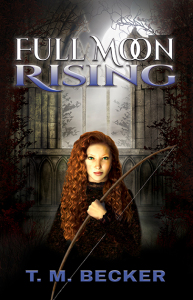
Full Moon Rising
by T. M. Becker

I have high praise for Becker’s first published novel.  It is excellent in many ways.

Let’s begin with the little stuff.  I read a lot of books in which I cringe at editing mistakes, typos, grammatical errors, spelling errors, misused words, punctuation problems, and the like.  Here the editing was immaculate.  I think there were perhaps two sentences in the entire book which I thought I might phrase differently, one place where I had to pause and figure out who made one statement in a three-way conversation.  There is no editor credit other than thanks to a writer’s workshop group; I am guessing that it is her own linguistic skill that is responsible for this.

She somewhere has acknowledged the influences of J. R. R. Tolkien and J. K. Rowling, and her story fits comfortably between Hobbits and Hogwarts but never blatantly borrows anything significant from either.  She demonstrates familiarity with subject matter, such as proper medieval architectural terms, common medicinal herbs, fashion and textiles and jewelry, and equestrian matters.  It at least feels as if she knows what she’s describing.  Her characters and creatures and settings while familiar are all original, or at least sufficiently distinct from any I have encountered elsewhere to say I don’t feel as if they were borrowed.

I struggle with titles.  I’m not sure that this book is well named, as the rising of the moon while significant in the main character’s life was less prominent in the story.  However, I would be hard-pressed to find a better title, and titles after all are essentially handles by which to identify stories.

The story revolves around Arabella.  It took me a while to learn her name, because it is written in the first person (and on this, kudos to Becker for never noticeably breaking perspective) and her name is rarely spoken–but I admit I often have problems with names of people, whether fictional or real.  There are quite a few conflicts and mysteries surrounding her, such as the disappearance of her mother, the oppressive regime that has conquered her country, the strange dreams she has when the moon approaches full, the magical trunk in her bedroom, the nature of the horse she rescues, and the threat of the evil wizard.  Some of these are not resolved within the book, and some are resolved too easily, such as the downfall of the oppressive regime after Arabella has fled the country.  However, the book is not about those stories.  It is very much about Arabella’s self-perception, the person she sees when she looks in the mirror and why she does not believe when others tell her she is beautiful.  It is a good story, and perhaps very meaningful for the target young adult audience; I recognized what was happening before the reveal, but I think we were supposed to be wondering why everyone saw her as beautiful but herself, and Becker accomplishes this layered into a story laced with adventure and excitement.

If I have a disappointment, it’s that I don’t know what Becker will write next.  Arabella has lived through her teen years and is about to marry her prince (unclear in the epilogue whether the wedding had occurred, but if not it is imminent); she would not be a suitable central character for the next book unless the villain kidnaps her before the wedding.  Speaking of the villain, we think he is dead, but he might have survived, but continuing Arabella’s story beyond a few weeks would not fit the target audience of the first book.  There is much that could be explored in this world, but difficult to set so good a plot to it as the one about Arabella in this book.  I fear my curiosities about the other fortresses, the secrets of Aramis, and so many other questions about what is just beyond what we were told will go unanswered.

Yet perhaps that is as it should be.  There is room in her world for another story, and room on the shelves should she decide to create another world.

I am giving the book five stars on Goodreads.  I think it one of the best books I have read in several years.

#222: The Range War Explodes: Interstate Water Rights

This is mark Joseph “young” blog entry #222, on the subject of The Range War Explodes:  Interstate Water Rights.

Your ranch is upstream, and they dammed up the water.
Thirsty cows scream for my uncle to slaughter
The sheep
While your daddy’s asleep,
And I do the same for his daughter.

The Range War, by Todd Rundgren

In my hopefully forthcoming book Why I Believe I used the example of the range war, probably recalled from this old Todd Rundgren Romeo and Juliet song, in asking whether or not it was “theft” for the owner of an upstream ranch to dam the water supplies to provide for his own livestock and family, if it reduces the amount of water that would otherwise naturally flow downstream onto his neighbor’s ranch to water his livestock.  It is a difficult and intriguing question:  can I steal something from you that you never had, simply by preventing it from reaching you?  If I prevent the water from flowing downstream, can you accuse me of theft?

It appears that the United States Supreme Court is going to answer that question:  Florida is suing Georgia for using too much fresh water from the rivers that supply its northern areas, and the court has granted certiorari.

Georgia has a pretty solid case.  After all, if a storm is coming and I get to the grocery store before you and buy the last of the milk, eggs, and bread (what is now being called a “French Toast Emergency”), did I thereby rob you of those supplies?  If you took me to court over that, you would probably be laughed out of the room.  It’s Georgia’s water; what they don’t use becomes Florida’s water; what they use to support their growing cities and their booming agriculture, they use.  It doesn’t seem that Florida can really claim that it’s their water before it reaches them, and if it never reaches them, it never becomes theirs.

On the other hand, it’s not like Florida can get to the water first by leaving earlier.  Florida is in a very real sense dependent on Georgia allowing the water to cross the border.  Further, these are serious environmental concerns, removing water from wilderness areas dependent on those rivers.

Since this is a dispute between two States, the Supreme Court has original jurisdiction–the case does not come to them on appeal from a lower court, and there are no prior decisions for them to consider.  An appointed Special Master has recommended that they side with Georgia, but at oral argument the justices reportedly seemed to be seeking a way to support Florida, Justice Ginsburg suggesting that a cap on Georgia’s water use might be necessary to protect its downstream neighbor.

Stay tuned for the resolution to this modern version of an old problem.

#221: Silence on the Lesbian Front

This is mark Joseph “young” blog entry #221, on the subject of Silence on the Lesbian Front.

Sometimes what the Supreme Court does not say is as significant at what it does say.  There is much speculation as to why they declined to hear a suit against a Mississippi law protecting a first amendment right not to support same sex weddings and similar matters.  The lower court ruling at this point is that the plaintiffs do not have standing, that is, none of them can demonstrate that the law has caused any of them actual harm, but the question behind that is why the court didn’t want to grab the case and decide the issue.

One possibility is that no one knows how it would fall, and no one wants to risk setting a precedent against their own view.  The conservatives would undoubtedly support the law, which makes it unlawful to bring any criminal or civil penalties against someone who for religious reasons refuses to provide services in support of acts they consider immoral, and particularly homosexual weddings.  The passage of the law invalidated local laws in Jackson and other metropolitan areas of the state that had protected the supposed rights of the homosexual couples.  Meanwhile, the liberal wing wants to normalize homosexual conduct, and have the law regard treatment of homosexuals as equivalent to treatment of blacks and women.  So we have an almost even split among the justices–but that there are an odd number of justices.

The swing vote is almost certainly Chief Justice Roberts.  He has been strong on first amendment rights, but has also sided in favor of homosexual rights.  If either side were sure of his vote, they would probably have accepted the case as a way of establishing a precedent favoring that position.  It thus may be that his position is uncertain, and neither side wants to take the risk.

On the other hand, the court has agreed to hear the cake case, in which a baker claims that a state law requiring him to make wedding cakes for homosexual weddings is an infringement on his religious liberty and freedom of speech.  The speech issue seems to be the one that is carrying the most weight with the justices, but it may be that the rejection of the Mississippi case is hinting out an outcome here.  If in the cake case it were decided that a state law could compel service providers to treat homosexual weddings the same as heterosexual weddings, it would still be an open question as to whether a state law can prevent any such compulsion, and the Mississippi case would matter.  However, if the Court were to decide that the baker cannot be compelled to create a cake for a homosexual wedding, that inherently supports the Mississippi law, saying that no one can be so compelled.

So the fact that the Court did not accept the Mississippi case could mean that they are leaning toward judgement in favor of the baker in the cake case, or it could mean that the position of the court is too uncertain for them to take case on the same issue so soon.  What it does not mean is that the Court has the votes to overturn the Mississippi law and wants to do so.

#220: The Right to Repair

This is mark Joseph “young” blog entry #220, on the subject of The Right to Repair.

When I was considerably younger, I did a small amount of electronics troubleshooting and repair.  My father was an electronics engineer who encouraged and assisted this, and my focus was primarily on audio equipment used by my band.  Back then you could buy components through RadioShack® and its sister catalog company Allied Electronics®, and through Lafeyette Electronics® and probably several other outlets.  Sometimes we ordered replacement parts directly from manufacturers, among whom Ampeg® deserves special mention for its support.

Nowadays modern electronics have gotten away from me.  I’ve got a rough understanding of transistors, and read an early book explaining integrated circuts, but microminiaturization is too difficult for my weak eyes and clumsy hands, and “negative feedback bass boost” and “RCL circuit” are more vague concepts in the back of my mind than real knowledge.  I have enough trouble wiring footswitches and jacks for my own home-designed equipment.  Computers and cellular phones are beyond me, and I almost always take them to professionals for work.  However, I usually take them to local professionals, not manufacturer repair services.  They’re cheaper, and I tend more to trust that they’re not going to try to sell me something I don’t need.

The problem faced by many of these repair services is that some manufacturers (the list starts with “A”) won’t provide what they need to make repairs–information such as schematics and programming data, parts, repair instructions.  Home handymen like me can’t get these, either.  The manufacturer doesn’t want you to be able to repair your device.  It wants you to have to pay it inflated rates to repair it, or replace it with a new device it is ready to sell you.  Thus for even so simple a problem as a cracked screen, the company is not going to sell you a replacement screen nor provide you the installation instructions for it.  You either buy a new device or pay them to fix the old one.

The State of New Jersey thinks this shouldn’t be permitted.  The legislature is reportedly considering a bill, the Fair Repair Act, which will require manufacturers to make parts and information available for independent and home repairs of electronic devices.  As one who has benefited from the availability of such technology in the past, and who utilizes the services of independent repair outlets, I much favor this bill, and encourage you to support it if you live in New Jersey.

Even if you don’t, this will be significant.  If companies are required to make this kind of support available in New Jersey, with today’s international market it effectively becomes available worldwide.  It will also be a boost to small businesses, as it becomes possible for them to repair electronic devices previously clouded behind company secrets.

It won’t be a complete revelation of everything.  Manufacturers will try to stop the bill, claiming that it will require them to reveal trade secrets.  However, New Jersey has a legislatively defined meaning of “trade secret”, and anything that falls within its parameters will be protected under the law.  What won’t be protected is the arbitrary creation of monopolies on repairs and replacement parts for cell phones and similar consumer electronics, and it’s past time to do it.

#219: A 2017 Retrospective

This is mark Joseph “young” blog entry #219, on the subject of A 2017 Retrospective.

A year ago, plus a couple days, on the last day of 2016 we posted web log post #150:  2016 Retrospective.  We are a couple days into the new year but have not yet posted anything new this year, so we’ll take a look at what was posted in 2017.

Beginning “off-site”, there was a lot at the Christian Gamers Guild, as the Faith and Gaming series ran the rest of its articles.  I also launched two new monthly series there in the last month of the year, with introductory articles Faith in Play #1:  Reintroduction, continuing the theme of the Faith and Gaming series, and RPG-ology #1:  Near Redundancy, reviving some of the lost work and adding more to the Game Ideas Unlimited series of decades back.  In addition to the Faith and Gaming materials, the webmaster republished two articles from early editions of The Way, the Truth, and the Dice, the first Magic:  Essential to Faith, Essential to Fantasy from the magic symposium, and the second Real and Imaginary Violence, about the objection that role playing games might be too violent.  I also contributed a new article at the beginning of the year, A Christian Game, providing rules for a game-like activity using scripture.  Near the end of the year–the end of November, actually–I posted a review of all the articles from eighteen months there, as Overview of the Articles on the New Christian Gamers Guild Website.

That’s apart from the Chaplain’s Bible Study posts, where we finished the three Johannine epistles and Jude and have gotten about a third of the way through Revelation.  There have also been Musings posts on the weekends.

Over at Goodreads I’ve reviewed quite a few books.

Turning to the mark Joseph “young” web log, we began the year with #151:  A Musician’s Resume, giving my experience and credentials as a Christian musician.  That subject was addressed from a different direction in #163:  So You Want to Be a Christian Musician, from the advice I received from successful Christian musicians, with my own feeling about it.  Music was also the subject of #181:  Anatomy of a Songwriting Collaboration, the steps involved in creating the song Even You, with link to the recording.

We turned our New Year’s attention to the keeping of resolutions with a bit of practical advice in #152:  Breaking a Habit, my father’s techniques for quitting smoking more broadly applied.

A few of the practical ones related to driving, including #154:  The Danger of Cruise Control, presenting the hazard involved in the device and how to manage it, #155:  Driving on Ice and Snow, advice on how to do it, and #204:  When the Brakes Fail, suggesting ways to address the highly unlikely but cinematically popular problem of the brakes failing and the accelerator sticking.

In an odd esoteric turn, we discussed #153:  What Are Ghosts?, considering the possible explanations for the observed phenomena.  Unrelated, #184:  Remembering Adam Keller, gave recollections on the death of a friend.  Also not falling conveniently into a usual category, #193:  Yelling:  An Introspection, reflected on the internal impact of being the target of yelling.

Our Law and Politics articles considered several Supreme Court cases, beginning with a preliminary look at #156:  A New Slant on Offensive Trademarks, the trademark case brought by Asian rock band The Slants and how it potentially impacts trademark law.  The resolution of this case was also covered in #194:  Slanting in Favor of Free Speech, reporting the favorable outcome of The Slant’s trademark dispute, plus the Packingham case regarding laws preventing sex offenders from accessing social networking sites.

Other court cases included #158:  Show Me Religious Freedom, examining the Trinity Lutheran Church v. Pauley case in which a church school wanted to receive the benefits of a tire recycling playground resurfacing program; this was resolved and covered in #196:  A Church and State Playground, followup on the Trinity Lutheran playground paving case.  #190:  Praise for a Ginsberg Equal Protection Opinion, admires the decision in the immigration and citizenship case Morales-Santana.

We also addressed political issues with #171:  The President (of the Seventh Day Baptist Convention), noting that political terms of office are not eternal; #172:  Why Not Democracy?, a consideration of the disadvantages of a more democratic system; #175:  Climate Change Skepticism, about a middle ground between climate change extremism and climate change denial; #176:  Not Paying for Health Care, about socialized medicine costs and complications; #179:  Right to Choose, responding to the criticism that a male white Congressman should not have the right to take away the right of a female black teenager to choose Planned Parenthood as a free provider of her contraceptive services, and that aspect of taking away someone’s right to choose as applied to the unborn.

We presumed to make a suggestion #159:  To Compassion International, recommending a means for the charitable organization to continue delivering aid to impoverished children in India in the face of new legal obstacles.  We also had some words for PETA in #162:  Furry Thinking, as PETA criticized Games Workshop for putting plastic fur on its miniatures and we discuss the fundamental concepts behind human treatment of animals.

We also talked about discrimination, including discriminatory awards programs #166:  A Ghetto of Our Own, awards targeted to the best of a particular racial group, based on similar awards for Christian musicians; #207:  The Gender Identity Trap, observing that the notion that someone is a different gender on the inside than his or her sex on the outside is confusing cultural expectations with reality, and #212:  Gender Subjectivity, continuing that discussion with consideration of how someone can know that they feel like somthing they have never been.  #217:  The Sexual Harassment Scandal, addressed the recent explosion of sexual harassment allegations.

We covered the election in New Jersey with #210:  New Jersey 2017 Gubernatorial Election, giving an overview of the candidates in the race, #211:  New Jersey 2017 Ballot Questions, suggesting voting against both the library funding question and the environmental lock box question, and #214:  New Jersey 2017 Election Results, giving the general outcome in the major races for governor, state legislature, and public questions.

Related to elections, #213:  Political Fragmentation, looks at the Pew survey results on political typology.

We recalled a lesson in legislative decision-making with #182:  Emotionalism and Science, the story of Tris in flame-retardant infant clothing, and the warning against solutions that have not been considered for their other effects.  We further discussed #200:  Confederates, connecting what the Confederacy really stood for with modern issues; and #203:  Electoral College End Run, opposing the notion of bypassing the Constitutional means of selecting a President by having States pass laws assigning their Electoral Votes to the candidate who wins the national popular vote.

2017 also saw the publication of the entirety of the third Multiverser novel, For Better or Verse, along with a dozen web log posts looking behind the writing process, which are all indexed in that table of contents page.  There were also updated character papers for major and some supporting characters in the Multiverser Novel Support Pages section, and before the year ended we began releasing the fourth novel, serialized, Spy Verses, with the first of its behind-the-writings posts, #218:  Versers Resume, with individual sections for the first twenty-one chapters.

Our Bible and Theology posts included #160:  For All In Authority, discussing praying for our leaders, and protesting against them; #165:  Saints Alive, regarding statues of saints and prayers offered to them; #168:  Praying for You, my conditional offer to pray for others, in ministry or otherwise; #173:  Hospitalization Benefits, about those who prayed for my recovery; #177:  I Am Not Second, on putting ourselves last; #178:  Alive for a Reason, that we all have purpose as long as we are alive; #187:  Sacrificing Sola Fide, response to Walter Bjorck’s suggestion that it be eliminated for Christian unity; #192:  Updating the Bible’s Gender Language, in response to reactions to the Southern Baptist Convention’s promise to do so; #208:  Halloween, responding to a Facebook question regarding the Christian response to the holiday celebrations; #215:  What Forty-One Years of Marriage Really Means, reacting to Facebook applause for our anniversary with discussion of trust and forgiveness, contracts versus covenants; and #216:  Why Are You Here?, discussing the purpose of human existence.

We gave what was really advice for writers in #161:  Pseudovulgarity, about the words we don’t say and the words we say instead.

On the subject of games, I wrote about #167:  Cybergame Timing, a suggestion for improving some of those games we play on our cell phones and Facebook pages, and a loosely related post, #188:  Downward Upgrades, the problem of ever-burgeoning programs for smart phones.  I guested at a convention, and wrote of it in #189:  An AnimeNEXT 2017 Experience, reflecting on being a guest at the convention.  I consider probabilities to be a gaming issue, and so include here #195:  Probabilities in Dishwashing, calculating a problem based on cup colors.

I have promised to do more time travel; home situations have impeded my ability to watch movies not favored by my wife, but this is anticipated to change soon.  I did offer #185:  Notes on Time Travel in The Flash, considering time remnants and time wraiths in the superhero series; #199:  Time Travel Movies that Work, a brief list of time travel movies whose temporal problems are minimal; #201:  The Grandfather Paradox Solution, answering a Facebook question about what happens if a traveler accidentally causes the undoing of his own existence; and #206:  Temporal Thoughts on Colkatay Columbus, deciding that the movie in which Christopher Columbus reaches India in the twenty-first century is not a time travel film.

I launched a new set of forums, and announced them in #197:  Launching the mark Joseph “young” Forums, officially opening the forum section of the web site.  Unfortunately I announced them four days before landing in the hospital for the first of three summer hospitalizations–of the sixty-two days comprising July and August this year, I spent thirty-one of them in one or another of three hospitals, putting a serious dent in my writing time.  I have not yet managed to refocus on those forums, for which I blame my own post-surgical life complications and those of my wife, who also spent a significant stretch of time hospitalized and in post-hospitalization rehabilitation, and in extended recovery.  Again I express my gratitude for the prayers and other support of those who brought us through these difficulties, which are hopefully nearing an end.

Which is to say, I expect to offer you more in the coming year.  The fourth novel is already being posted, and a fifth Multiverser novel is being written in collaboration with a promising young author.  There are a few time travel movies available on Netflix, which I hope to be able to analyze soon.  There are a stack of intriguing Supreme Court cases for which I am trying to await the resolutions.  Your continued support as readers–and as Patreon and PayPal.me contributors–will bring these to realization.

Thank you.

#218: Versers Resume

This is mark Joseph “young” blog entry #218, on the subject of Versers Resume.

With permission of Valdron Inc I have now completed publishing my first three novels, Verse Three, Chapter One:  The First Multiverser Novel, Old Verses New, and For Better or Verse, in serialized form on the web (those links will take you to the table of contents for each book).  Along with each book there was also a series of web log posts looking at the writing process, the decisions and choices that delivered the final product; those posts are indexed with the chapters in the tables of contents pages.  Now as I am posting the fourth, Spy Verses,  I am again offering a set of “behind the writings” insights.  This “behind the writings” look may contain spoilers because it sometimes talks about what I was planning to do later in the book–although it sometimes raises ideas that were never pursued.  You might want to read the referenced chapters before reading this look at them.  Links below (the section headings) will take you to the specific individual chapters being discussed, and there are (or will soon be) links on those pages to bring you back hopefully to the same point here.

There is also a section of the site, Multiverser Novel Support Pages, in which I have begun to place materials related to the novels beginning with character papers for the major characters, hopefully giving them at different stages as they move through the books.

This is the first mark Joseph “young” web log post covering this book, covering chapters 1 through 21.

History of the series, including the reason it started, the origins of character names and details, and many of the ideas, are in those earlier posts, and won’t be repeated here.

Chapter 1, Kondor 97

I was bringing Joe in from the end of the second book, when he was floating in space, and anticipating a moment when he would realize that he and Slade had both just left Derek a few minutes before.  I also wanted to color Kondor as the sort of person who would deduce things about the indigs from the way their world was designed.


Chapter 2, Brown 97

I had never wanted my versers to spend too much time with Merlin, as this would make them too much the same.  I had an advantage, in that I’d established Merlin’s usual technique as beginning with a long stretch of exploration of what the student already knew, so if I could get them out soon enough none of them (Derek, Slade, or Shella) would be pushed toward being Lauren’s clones.  Now, though, I had another reason to end it quickly, as I wanted Slade to join Kondor in Slade’s first chapter, so I was going to have to use Derek as the bridge to get Slade out.

It seemed I was also going to have to get Derek out; taking Slade and Shella at this battle and leaving Derek with Merlin and Bethany was going to decimate my dome attack team, and there wouldn’t be much more they could do against the vampires.  I needed to make it seem as if with the loss of Slade and Shella they won the war, that there was nothing much left to do, but then I would also have to verse out Derek.  This gave me another problem:  Bethany.  I’d established that Merlin was a verser, but I’d also established rather satisfactorily that Bethany was not.  I could make her one, but didn’t want to do that, particularly as my wife always found her annoying.  On the other hand, one of my sons (Adam, I think) liked the character, and I felt I needed to give her closure.  Thus I needed to establish a good ending for her.

The end of the world seemed a good way to satisfy that.  I kept it simple; I wanted people to know what was happening, but didn’t want to dwell on it.

I still needed to get Derek out of there, so he lost that battle.


Chapter 3, Slade 93

The point was to bring Bob to Kondor’s world before anything else happened, without making it seem I was stalling Kondor.  Thus I covered Slade’s disappearance from the final battle of the vampire future world through Derek’s eyes, and then shifted to a very brief recounting from Bob’s perspective and brought him abruptly to somewhere in the compound.

This chapter largely brings everyone up to speed on the characters, and aligns the stories so we know the sequence of events from the previous books.


Chapter 4, Kondor 98

The verse is something modern people accept fairly easily, but Shella is from a medieval fantasy world, and is going to be a bit overwhelmed by it all even now.  She is to some degree struggling to absorb it all; she bites her lip as she considers how to respond to Joe Kondor.

Shella’s blush is there because of course she’s kept track of the days–guilty as charged.  I have not, and I’m not sure whether I could reconstruct them with any accuracy, but hopefully it won’t matter.

Adrus is the name of the first month on the calendar I created for my D&D game world; Zarn was just a word I pulled out of the air to provide what might have been a month on some other calendar.

Joe takes a very humanist/agnostic view of love:  it serves a biological function of creating families for the production and rearing of children, for the continuance of the race.  It is thus irrelevant in the lives of versers, because they will never die and do not need to replace themselves.

I grew up with computers, sort of, but I think my attitude to computers in cars is still somewhat like Bob’s.  I understand how points and plugs and distributors work, but computer-controlled fuel injection I’ve never understood.

At this moment I decided that the cameras would be mounted on the guns, so the operators could use them to aim.  That would have consequences later.


Chapter 5, Brown 98

Derek is now experiencing the “stage two” arrival in which reality and dreams combine in awkward ways until you manage to awaken.  I have to do it for every character at least once, some more than once, and this was his turn.

The consideration of what can be learned about the world from the existence of leaves was something I was devising kind of in reverse of what I knew.  That is, I knew that leaves had the patterns and colors they did in order to capture and process light efficiently, and thus if there were leaves in such patterns and similar colors it would be reasonable to infer that that was their function.

I don’t know the difference between a forest and a jungle; I’m thinking that I should ask someone who knows, but I don’t really need to know to tell this part of the story.  I eventually did ask someone with a degree in ecology, but she was not certain either.


Chapter 6, Slade 94

Bob’s definition of “people” as having discovered swords is probably pushing back toward the humorous side of the character.

That Shella misses the connection to Derek is perhaps awkward, as she was there when Bob met him, but they probably think about him in different ways, and she also has the connection that in her world of origin people said that Slade had elfin blood, so that connects him to the fairy people in her mind.


Chapter 7, Brown 99

I had gotten to what was chapter 77, Slade 118, alternating rather consistently Kondor-Brown-Slade, but I was struggling with a couple of issues.  One was that Derek’s story had a lot of detail best managed in small chapters, and that meant that his story was moving very slowly in the book.  Another was that I had Bob and Joe in the same world, so I was telling their story two chapters in a row every time, even though it was a slow story, more an intellectual conflict, and I didn’t always know what was happening.  When I reached that point, I realized that I could resolve a lot of this if I backed up and moved all the chapters around and renumbered them so that Derek’s story was told twice, in a Kondor-Brown-Slade-Brown sequence.  It was a lot of shuffling of text (thank the Lord for word processors), but Derek’s chapters through somewhere around Brown 119 got moved forward, including this one.


Chapter 8, Kondor 99

Mlambo was the surname of a college peer of mine, Lyson Qorani Mlambo.  I enjoyed saying his name because of the unusual (for English) consonantal combinations–the “Q” represented a click created by pulling the tongue from the roof of the mouth.  I used the surname for the commander; I then used the first name as the surname of one of the other officers.  Lyson was a student from somewhere in Africa.

It was about here that I formed the idea of a race war, that this bunker belonged to the “black” side.


Chapter 9, Brown 100

I had done the energy release for Derek because even though it was supposed to be a body morphing transformation, the mass difference would need some kind of explanation; but I realized as I was working through it that the mass/energy conversion was as big as Derek saw, and thus that even without the magic some of that mass had been shunted into some other dimension or something.  Thus I had created the trick that he had to restore a significant amount of energy through caloric intake in order to reach and retain his larger size, and at the same time attempted to defuse objections that he couldn’t possibly gain that much energy from eating a single meal no matter what it contained.

I created the Reptile House team mostly of people I knew, several of them players in the game.  It was inspired because Ed Jones sometimes called himself Chameleon, and particularly when he was wearing his army reserve camouflage outfit; I had taken to calling myself Sea Turtle, a reference to something of a joke for which one took a test to see whether one could “think clean” when asked a set of questions which were suggestive of lewd answers but also had clean answers, and I was officially a Sea Turtle.  Thus I formed the team with Ed as the field commander Chameleon and me as the unit commander Sea Turtle; the others will be introduced as they appear.


Chapter 10, Slade 95

The idea of calling the whites “ghosts” had a lot of appeal here.  I needed a racial slur that was not a racial slur in our world, and everyone imagines ghosts to be pale and thus white, so it fits.

There is also some of the discriminatory attitude that American blacks faced mostly in the south:  Mlambo is concerned that he can’t provide separate facilities for the ghosts, because of course whites would not be permitted to use the same facilities as blacks.


Chapter 11, Brown 101

This world was designed for The Third Book of Worlds.  The opening can drop the player character anywhere in the world and then have the pickup team there within forty-eight hours.  This is ultimately explained in the story.  The world is called Why Spy, and is designed to facilitate playing plots from spy movies and similar sources, making the player character the secret agent.  “C” is my version of Bond’s “M” or Smart’s “Chief”.  It actually stands for “Claude”, and he’s a character from another world as well.  He is based on the generic British gentleman in the secret service, no particular individual.

“Iguana” is a college friend of mine, “Big Brother” Archie Bradley.  It’s more for the physical description, although the character of being a nice guy despite a formidable appearance is part of it.

“Python” is based on Joe Kondor, who in turn is not really based on anyone.  The idea is that this is Joe’s divergent self.  I put him here intentionally, to make a connection that this was a parallel earth, and to create a surprise situation.

“Gecko” is Richard Lutz, whom I never met.  I make him a tech head here, and he’s the guy who has the portable scriff detection equipment, plus the main communications gear.  I was more than once told that he had a Video Cassette Recorder (VCR) with no buttons, and accessed the functions by knowing which exposed wires to cross.

“Kimodo Dragon” was the transport officer; I made my son Ryan the model for this, and gave him the conceit that he could drive or fly any vehicle.

“Cobra” was a divergent of Chris Jones, largely because he had studied some martial arts and I wanted to intensify that and make him strong and fast.  In play we sometimes get the Reptile House team working with the player character in adventure situations, but I wasn’t sure whether I was going to do that here.  Chris, of course, was the primary model for Bob Slade, although Chris has dark hair, not blonde, and never was an auto mechanic or an Odinite, even in the game.  He is also the player behind the character Whisp, detailed in an appendix in Multiverser:  Referee’s Rules.

Originally I had written “shooting knock-out darts at guys with guns didn’t sound like a clever plan,” but I realized during the major edit that that was exactly the plan which led to the development of the arrow drug.  I decided that it made a difference that it was “several guys” and that they had “automatic weapons” instead of “guns”, and also decided that “needles” was a better description of the arrows here.


Chapter 12, Kondor 100

A lot of Joe’s prejudices emerge here.  The first one is that religion is a mark of a lesser intellect, and thus Bob must not be that bright if he thinks he’s one of Odin’s chosen warriors.

Joe also thinks that the fact that Bob did not notice that everyone in the other room was black indicated that he was prejudiced–that not noticing someone’s color was indicative of discrimination based on race.  Bob, of course, thinks that it’s perfectly natural, and there’s no particular reason he should have noticed something like that; black soldiers are common, and it’s because a lot of blacks see it as a good economic choice.

Lyson’s prejudice is also shown when he reacts to Bob speaking to him.

On the edit, I seriously considered altering “If Slade didn’t understand why noticing the color of someone’s skin was important,” to read “If Slade didn’t understand why not noticing the color of someone’s skin was racist,” but I decided that was too strong and probably not really the way Kondor would have thought it.


Chapter 13, Brown 102

The problem of Derek attempting to fly through the turbulence created by the helicopter blades was a sudden realization, a recognition of the realities of the situation.

I knew all along that he was in the Amazon rainforest; this was the first time I said so.

The rapid consumption, digestion, and metabolizing of the high-energy food and drink was my best idea for the transformation.  I might have gotten some of this from episodes of The Flash, the 1990s version, in which Barry Allen consumes large quantities of food to maintain his energy level after running, but I don’t know that I ever recognized the connection.


Chapter 14, Slade 96

Shella very much reveals her girl side, prettying the barracks room for their brief stay with knick-knacks and a comforter.  She also predictably complains when Bob starts polishing his dagger on their good comforter.

I didn’t yet know what they were supposed to do, or going to do, while they were here.  I’ve got them exploring the possibilities.


Chapter 15, Brown 103

“The clock” is of course Big Ben.  It’s probably the most recognizable landmark in London, at least in an international sense.  Most Americans would not recognize most of the truly significant buildings and other landmarks in the city, but the clock is known.

Derek’s age is of course problematic from any perspective.  Like versers, he doesn’t age, so he kept his twelve-year-old appearance into his twenties; then he had the rare experience of returning to pre-born and growing up again, this time reaching about seventeen before dying.  So he is probably around fifty by years lived, but it would be difficult to say how old his body appears to be.

This is really the standard setup for the game world:  British Intelligence knows that versers are dangerous, and that they have a lot of advantages in the spy game, and so recruits them; C does not want them working for anyone else, and will do whatever it takes to prevent that.  I had one player get very upset about not being given a choice in the matter, but usually they like it and go with the flow.


Chapter 16, Slade 97

Shella challenges Bob’s self-perception in this chapter.  Most of us have ideas about ourselves, that we are this and not that, and sometimes those ideas are contrary to the evidence.

Joe is trying to figure out what’s happening, and at this point I didn’t know how he was going to do that; but I figured he would try to include recovering his gear in the process, and that meant going outside.


Chapter 17, Brown 104

The name Kyler Bryant borrows from one of my sons; I thought it likely I would use this passport at some point, so I detailed it.

The driving training is there so that if I have a use for it in the future I’ve got the foundation for it here.  I don’t know when I’ll use it.

The recognition that Derek is lonely is a fairly obvious one, particularly given that in the last world he was fighting alongside his odd collection of friends, and in the world before that he was part of a close family for a long time.  I have not considered yet how to address it, because things are about to happen for him.

I didn’t waste names on the other passports because I guessed I would not need them, and knew I could give them names later if necessary.

About halfway through the read-through edit (after chapter 75), probably because I had just written chapter 143 (Brown 159) in which Derek arrives in the final world, it occurred to me that Derek’s gear had been neglected for most of two decades, and the bicycle in particular would need some maintenance.  I came back to this chapter and added parts about cleaning and repairing his equipment, and letting Gear examine his things.  I had originally written the part about them developing an analog of his drug, but at this point I added the provision of several small containers of the stuff.


Chapter 18, Kondor 101

I started to play with the idea that Kondor’s cover story might make him someone people feared; I don’t think I ever decided about that, but it’s not something he could ever ask or anyone would ever say.

I also needed to find a way for him to learn what was going on in this world, and it made sense that there would be reading materials somewhere which would include the official propaganda.


Chapter 19, Slade 98

By having Joe stay late in the library and Bob fall asleep, I saved myself a useless chapter in which Joe stops to tell Bob to go to sleep.

I didn’t know what I was going to do with my characters once they left the bunker, so I figured an early morning attack would trap them here for a bit and I could work through the situation here.


Chapter 20, Brown 105

When I was in college for a while I had a night job, and so I often ate in my room.  I was stocked with a toaster and a percolator coffee pot in which I heated water, and I had instant oatmeal, instant soup, and toaster pastries which I tended to eat because I was at work during dinner and asleep through breakfast.  I also caught supper at any of several fast food places in the area (Gino’s was both very convenient and much preferred at the time), but I lost a lot of weight.  In any case, the idea of instant oatmeal and toaster pastries as something Derek could easily make for brunch was from my experience.

The high rise scenario is from the Why Spy game world.  It was an experimental approach in which the scenes were organized as they would appear in a movie, and the referee created the encounters and picked the floors as the players moved through the building.  It was intended to prevent the possibility that someone would go directly to the bomb, making it play more like the action movies Die Hard or Under Siege.  It undoubtedly owes something to True Lies, as well.


Chapter 21, Slade 99

I had to work out myself what it was that Bob could notice, and how to turn that to a useful bit of strategic analysis.  I had to figure out what it was the white army was trying to do, and how that was supposed to work.

I realized that I had created the weakness by tying the cameras to the guns:  if the whites could get the guns focused in specific directions, they could create a blind spot.  That, I figured, was the best guess for what they were doing, so I went with it.


This has been the first behind the writings look at Spy Verses.  If there is interest and continued support from readers we will continue to publish this novel and the behind the writings posts, and prepare the fifth novel to follow it.